
Why a clear spec matters in logistics
Warehouses and distribution centres are high-throughput environments. A written cleaning specification keeps standards consistent, minimises slip and dust risks, supports audits, and—crucially—fits around picking, packing and forklift/pallet-truck routes without interrupting throughput. For sector detail, see HSE warehousing safety guidance.
What a zoned daily routine looks like in Warehouse & Logistics Cleaning
● Goods-in & marshalling: remove packaging debris, sweep/mop marked routes, sanitise touch points (dock controls, door buttons).
● Aisles & racking zones: scheduled sweeping, spot clean spillages, touch-point wipe on shared scanners/handrails.
● Pick/pack & packing benches: wipe benches, tools and touch points; empty waste; tidy materials.
● Staff areas: canteens, welfare spaces and offices kept clean and stocked.
● Washrooms & lockers: clean/disinfect fixtures; restock supplies; mop and dry floors.
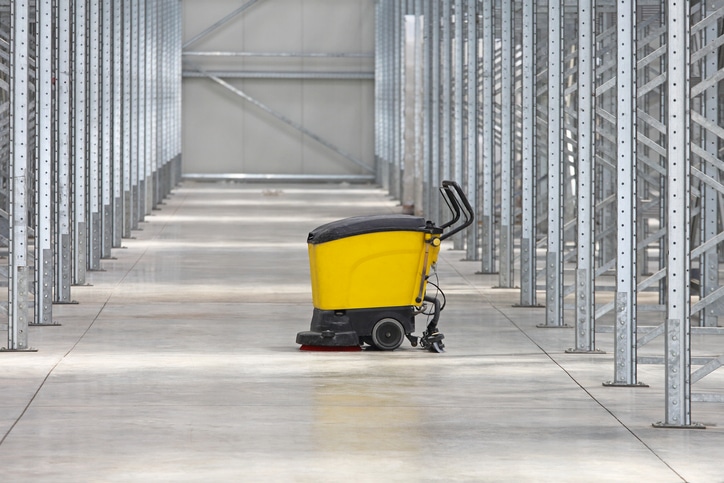
● Floors: machine scrub or sweep (where suitable) on planned cycles; spot clean spills promptly.
● Waste & recycling: remove to agreed points; baler/cardboard cages kept safe and tidy.
Planned bolt-ons within the contract (not one-offs): internal glass/office areas, external windows on a cycle, targeted carpet extraction (offices), and washroom hygiene & consumables.
Frequencies that work by zone
Daily: goods-in/out, pick/pack benches, welfare areas, washrooms, main pedestrian routes and touch points.
Twice daily (busy shifts): washrooms and high-traffic entrances.
Weekly: detail cleans around packing lines, glass partitions, edges/skirtings.
Monthly/quarterly: machine scrub of hard floors, high-level dusting (where access allows), targeted carpet care in offices.
Out-of-hours and around shifts
We plan routines before start-up, between shifts or after close. Where 24/7 operations run, we clean during brief intervals and in safe zones, using agreed banksman rules and exclusion zones so cleaning never blocks forklift and pallet-truck routes.
Mobilisation for logistics sites
Survey & zone map
We review traffic flows, floor finishes, racking layout and risk areas; then agree a zone map with you.
Spec & schedule
Tasks, frequencies and timings matched to shift patterns and site rules, delivered as part of your daily contract cleaning.
RAMS & COSHH
Site-specific RAMS and product data; colour-coding to prevent cross-contamination. For cleaning-floor risk management, see HSE cleaning floors guidance.
Team, training & supervision
Named operatives inducted to site rules (PPE, banksman signals, speed limits), supervised by a named lead.
First-month review
We fine-tune timings and cycles once live, based on real footfall and production peaks.
Products, methods and sustainability in Warehouse & Logistics Cleaning
We use fit-for-purpose products with controlled dilution, microfibre systems to cut chemical use, and HEPA-filtered vacuums for dust control. Machine scrubbers and sweepers are specified to floor type and route width. Lower-impact options and refill/dispense plans are available where you have sustainability targets.
How we measure quality
- Regular audits and clear standards keep everyone aligned. You’ll get concise reports with actions so you can evidence standards.
- Monthly quality audit score with photos and fixes.
- Attendance/timing vs plan.
- Issues resolved by next visit.
- Washroom consumables kept in stock.
Health, safety and documentation
We follow your inductions and traffic rules, and provide site-specific RAMS, COSHH data and equipment checks where relevant. Prompt clean-up of minor spills is included as specified in your contract, with simple escalation routes for larger incidents.
Add-ons within the contract (not one-offs)
- Window cleaning: internal glass in rounds; external on an agreed cycle.
- Office areas: targeted carpet extraction on a planned schedule.
- Washroom hygiene & consumables: supply and restock via a simple plan.
Pricing and how we start
Most logistics sites are priced per visit or contracted hour, with periodic tasks bundled in. After a site survey we confirm the spec/schedule and select a start date that avoids operational peaks.
What you’ll notice after month one
- Fewer slip/housekeeping issues reported.
- Cleaner main routes and touch points.
- Clear, simple records of work completed.
- A contract that runs in the background with a named supervisor.
FAQs
Can you clean around live vehicle routes?
Yes—by zoning, brief intervals and agreed exclusion routes. We never block forklift and pallet-truck lanes.
Do you provide spill response?
We provide prompt clean-up of minor spills as specified in your contract. Larger incidents follow your site protocol.
Can you work 24/7 sites?
Yes. We split routines around shift changes, nights or low-volume periods.
Do you supply washroom products?
We can supply and restock agreed consumables within your contract via washroom hygiene & consumables.
If you’d like a practical, shift-friendly cleaning spec for your warehouse or logistics site in the South West, request a site survey and we’ll map tasks, zones and frequencies to your operation.